




Grass-Fed vs. Grain-Finished: The Truth Most Beef Labels Won't Tell You
There's a war online over how beef should be raised. Most of it is noise from people who've never finished a steer. Here's how we actually do it — grass-fed and grain-finished — and why that's a choice, not a compromise.

There's a war online over how beef should be raised. Grass-fed people swear grain is poison. Grain guys say grass-fed is tough and gamey. Most of the loudest voices in that fight have never actually finished a steer. So let me cut through it — here's how we do it on our farm, and why.
First, Let's Clear Up What These Words Even Mean
The labels confuse people on purpose. "Grass-fed," "grass-finished," "grain-finished," "pasture-raised" — they get thrown around like they mean the same thing. They don't. And the gap between them is exactly where a lot of beef gets sold on a half-truth.
Here's the part nobody tells you: almost every cow on earth is grass-fed. Beef cattle spend the vast majority of their lives on pasture eating grass. That's just how cattle are raised. So when a label says "grass-fed," it's often telling you something that's true of nearly all beef — and counting on you to think it means something special.
The word that actually matters is finished. Finishing is the last few months before harvest — and it's where the real differences in flavor, fat, and texture get made.
The Label Decoder
Grass-fed: The animal ate grass at some point. Almost all cattle did. Says very little on its own.
Grass-finished: The animal ate only grass and forage its entire life, right up to the end. Leaner, more mineral-forward, can run tough if it's done wrong.
Grain-finished: The animal was raised on grass, then finished on grain for the last stretch. More marbling, richer flavor, more tender.
Pasture-raised: A welfare term about space and access to pasture — not a diet claim at all.
How We Finish Our Cattle — And Why
I'll tell you straight: our cattle are grass-fed and grain-finished. They spend their lives out on our Missouri pastures doing what cattle are built to do — grazing, moving, growing on grass. Then, for the final stretch, we finish them on grain.
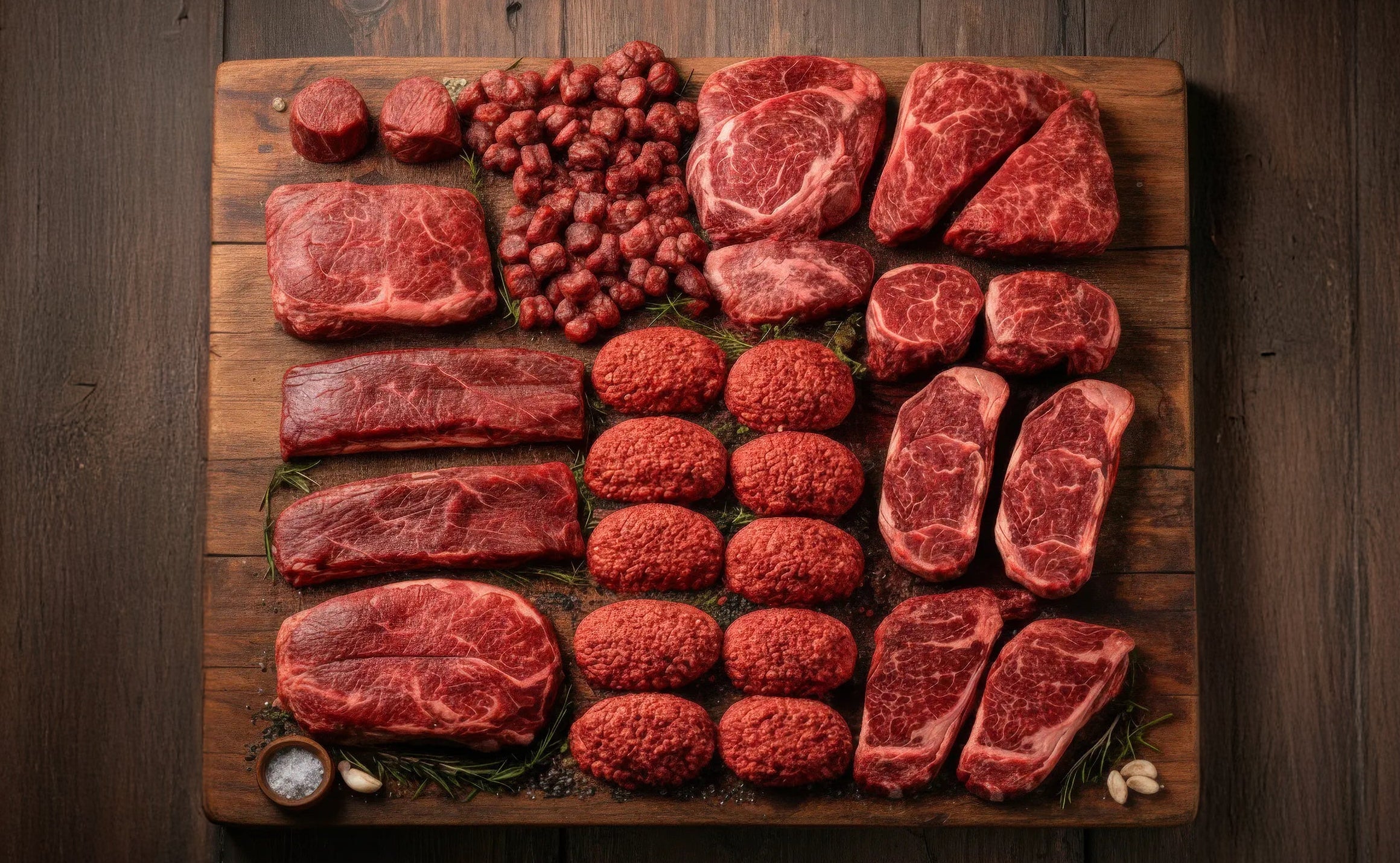
That's not us cutting a corner. That's a decision we make on purpose, every year, because of what it does to the beef. Grain finishing is what builds the marbling — those fine threads of fat running through the muscle that melt when you cook it and carry every bit of flavor. It's the difference between a steak that's lean and chewy and one that eats like butter.
"Anybody can raise a cow on grass. The finish is where you decide what kind of beef you're actually putting on someone's plate."
What Grass Does
Grass is the foundation. It's what keeps a herd healthy, what keeps our land working the way regenerative grazing is supposed to, and what gives the meat its deeper, more developed character. A steer that's been on good pasture its whole life is a healthier animal, full stop. We wrote more about how we manage that in our regenerative ranching post — that grazing system is the whole base this farm is built on.
What Grain Does
Grain at the end does one thing exceptionally well: it lays down marbling. That intramuscular fat is where tenderness and flavor live. It's why grain-finished beef cooks up richer and more forgiving on the grill. We're not ashamed of it — we lean into it, because we'd rather sell you a steak you'll remember than win an argument on the internet.
Marbling from grain finishing is what gives the beef its rich, full taste. Lean grass-finished beef has a cleaner, more mineral flavor that some people love and some find too gamey.
That intramuscular fat melts as it cooks, basting the meat from the inside. It's the single biggest reason grain-finished beef is more tender and harder to overcook.
Grass-only finishing is at the mercy of the season — a dry summer means thinner forage and leaner cattle. Grain finishing lets us deliver the same quality every single time.
Either way, our cattle spend their lives on open pasture. The grain isn't a feedlot existence — it's a finishing period on top of a life lived the right way.
The Myth That Grass-Finished Is Automatically "Better"
Here's where I'll lose a few of the purists. Grass-finished beef is not automatically healthier, cleaner, or more ethical. It's different. Done by someone who knows what they're doing, grass-finished beef is fantastic. Done poorly — rushed, on weak forage, slaughtered before the animal's ready — it's tough, lean, and disappointing.
And a lot of the "100% grass-fed" beef in the grocery store cooler? It's imported from Australia or South America, frozen, shipped halfway around the world, and finished on whatever pasture was cheapest. "Grass-fed" on that package is doing a lot of marketing work and not much else.
What Actually Matters More Than the Label
Who raised it. How the land was managed. How the animal lived. How it was finished, and by whom. Whether you can actually trace it back to a real farm with a real name on it.
A label is four words on plastic. The farm behind it is the whole story. That's the part you should be asking about.
How To Actually Choose Beef — A Rancher's Take
Ignore the front of the package
The big bold claims are marketing. "Grass-fed," "all natural," "farm raised" — these are designed to make you feel good, not to inform you.
Find out where it's from
If you can't trace the beef to a specific farm or region, that's your answer. Real producers are proud to tell you exactly where it came from.
Ask how it was finished
This is the question that separates people who know their beef from people who are guessing. Grass, grain, how long, by whom.
Look at the marbling
Those white flecks running through the red aren't something to avoid — that's flavor and tenderness you can see with your own eyes before you ever cook it.
Buy from people, not packages
When you buy from a farm that puts its name on the product, you're buying accountability. We can't hide behind a barcode — our family's name is on every cut.
"I'm not trying to win the grass-versus-grain fight. I'm trying to put the best steak I can on your table. Those are different goals, and only one of them feeds my family."
The Bottom Line
Grass-fed versus grain-finished isn't good versus evil. It's two tools, and a good rancher uses both. We graze our cattle on pasture because it's right for the animal and right for the land. We finish them on grain because it makes a better steak. We don't apologize for either one.
What we won't do is sell you a label and hope you don't ask questions. Ask us anything — where it's from, how it lived, how we finished it. We'll tell you the truth every time, because the truth is the whole reason people buy beef from a farm instead of a faceless brand. And when you're cooking that beef, the fat we trim doesn't go to waste either — we render it into our own cooking tallow, but that's a story for another day.
— Steven McBee, McBee Farm & Cattle Co.
Be First to Know
Get straight talk on how good beef is actually raised — and first word when fresh cuts hit the store.