




We Just Transferred 30 Highland Embryos. Here's Why.

Most cattle operations are built around efficiency — big numbers, consistent genetics, predictable pounds on the ground. We still run that way with our Angus herd. But this February, we did something a little different. We brought in 30 miniature Highland embryos and put them into our full-grown Angus cows as surrogates. Here's what that process looks like, why we did it, and what we're building.
What Is an Embryo Transfer, Exactly?
If you're not in the cattle world, this probably sounds like something out of a science fiction movie. It's not. Embryo transfer — or ET — has been a standard tool in elite cattle breeding for decades. It's how cattlemen rapidly multiply exceptional genetics without waiting years for cows to naturally produce calves.
Here's the simple version: you take a genetically superior donor cow, flush multiple embryos from her, and transfer those embryos into recipient cows who carry and deliver the calves. The recipient cow raises a calf that isn't genetically hers at all — she's just the surrogate. The genetics belong entirely to the donor.
In our case, the donors were miniature Highland cows. The recipients — the surrogates — are our full-grown commercial Angus cows. On paper, it's a beautiful match. In practice, it's a long day with a lot of moving parts.
The Step-by-Step: How Embryo Transfer Works
We worked with a reproductive veterinarian to handle the procedure. Here's what the process looked like from start to finish:
Synchronizing the Recipients
Weeks before the transfer day, our Angus recipient cows go through a hormonal synchronization protocol. The goal is to make sure their reproductive cycles align precisely with the embryo stage. Timing matters at the cellular level — an embryo transferred to a cow that's even a day off in her cycle can fail to implant.
Sourcing and Thawing the Embryos
Our miniature Highland embryos arrived frozen and were stored in liquid nitrogen until transfer day. Each embryo is evaluated under a microscope before use. A top-grade embryo is graded on quality, cell division, and structural integrity. You don't want to transfer anything less than a viable, well-developed embryo.
Rectal Palpation and Ovary Check
Before an embryo goes into any cow, the vet does a hands-on check via rectal palpation to confirm each recipient is in the right hormonal window. She should have a fresh corpus luteum — a small glandular structure that forms on the ovary after ovulation. No corpus luteum means the embryo won't have the progesterone support it needs to survive.
The Transfer
The actual transfer is a non-surgical procedure. The vet loads a single embryo into a transfer pipette and places it directly into the uterine horn on the same side as the corpus luteum. The whole thing takes just a few minutes per cow when everything runs smoothly. Multiply that by 30 cows and you've got a full, focused day on the farm.
Waiting and Confirming
After transfer day, the waiting begins. Around 30 to 45 days out, we'll pregnancy-check each recipient cow via ultrasound to see who took. Not every transfer results in a live pregnancy — that's the reality of the process. Industry averages run around 55–65% conception rates from quality fresh or thawed embryos. We're hopeful.
"You're not just breeding cattle. You're making a deliberate bet on genetics — on what you want this herd to look like in five years."

Why Miniature Highlands?
Fair question. We run a serious commercial Angus operation. So why bring in miniature Highlands?
A few reasons — some practical, some that are just honest about who we are and what we want this farm to be.
Mini Highlands eat significantly less than full-size cattle while still producing quality beef. On a per-pound-of-gain basis, they're extremely efficient grazers — especially on diverse pasture.
Smaller body size means less compaction, less pressure on pasture, and the ability to run a different kind of operation on acreage that might not support a full commercial load.
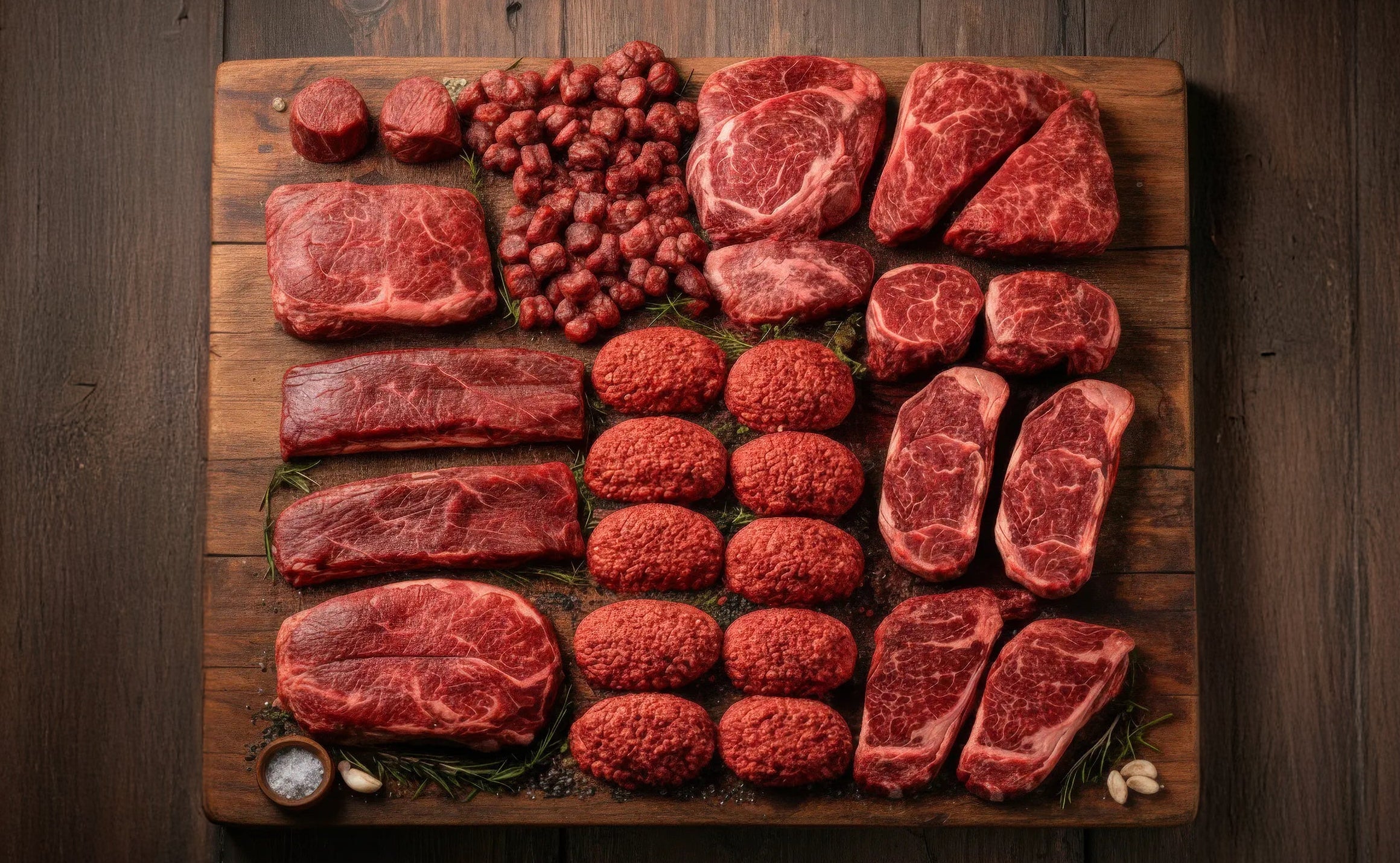
Highland beef is known for high marbling, deep flavor, and exceptional fat profiles. It's genuinely different beef — and a market that's still wide open compared to Wagyu or commodity Angus.
Mini Highlands are striking animals. Long hair, broad horns, and a temperament that's genuinely friendly. They represent a different side of what a working farm can look like.
Why Angus Cows as Surrogates?
Size compatibility is the main factor. Our Angus cows are large, well-nourished, proven mothers. A miniature Highland donor cow is too small to safely carry the calving load that a heavy embryo transfer program demands. By using full-size Angus as recipients, we're giving each embryo the best possible environment to develop — a spacious uterus with strong maternal instincts and plenty of milk production to back it up.
The calves will look nothing like their surrogate mothers. But they'll be well-fed, healthy, and growing fast from day one.
What We're Building Long-Term
This isn't a novelty project. We're building a genuine miniature Highland herd from the ground up, starting with high-quality genetics transferred into a proven surrogate population. If our conception rates hold, we could have a meaningful group of mini Highland calves on the ground this fall.
The long-term vision is a herd that produces ultra-premium, pasture-raised Highland beef that we can sell direct through McBee Farm & Cattle Co. — a product that tells a completely different story than commodity beef and commands a premium to match.
We're also genuinely excited about the animals themselves. Miniature Highlands are magnetic on a farm. Long, shaggy coats. Wide horns. Personalities you don't forget. If you've ever seen one up close, you understand the pull.
We'll keep documenting the journey — pregnancy checks, calving season, and everything that comes with building a herd from scratch using embryo transfer technology. Real farm, real process, no shortcuts.
Follow Along
We'll post updates as pregnancy results come in and as the calves arrive. If you want to be first to know when Highland beef products are available — or when we open the herd for registered stock sales down the road — get on our list below.
This is the kind of thing that takes time to build right. We're in no hurry to do it wrong.
— Steven McBee, McBee Farm & Cattle Co.
Be First to Know
Get updates on our Highland herd, calving season, and when premium Highland beef hits the store.